For containerised cargo with a firm delivery date, rail freight sits between slow, low-cost ocean freight and fast but expensive long-haul trucking. On the China–Turkey–Central Asia axis, where most of our operations run, rail is often the most balanced option, though not for every load.
When rail makes sense: rail vs road vs sea
The right mode depends on the cargo, its volume and value, and the delivery window. Transit times below are approximate terminal-to-terminal figures and vary with border, ferry and seasonal conditions.
| Criterion | Rail | Road | Sea |
|---|---|---|---|
| China → Turkey | About 12-18 days (Middle Corridor) | Rarely used end-to-end | About 30-45 days |
| Turkey → Kazakhstan | About 12-18 days (BTK + Caspian ferry) | About 7-10 days (northern route) | Not applicable |
| Cost level | Medium: above sea, often below road | Medium to high | Low |
| Door-to-door | Needs first- and last-mile trucking | Direct | Needs port haulage |
| Best suited to | Containerisable, bulky, mid-to-high value goods | Urgent, groupage, temperature-controlled | Heavy, high-volume, time-flexible |
The Middle Corridor and the BTK line
Rail traffic between China and Turkey mainly uses the Middle Corridor, also known as the Trans-Caspian International Transport Route. Container trains from Chinese terminals enter Kazakhstan at Dostyk or Khorgos, cross the country to the ports of Aktau or Kuryk, and cross the Caspian Sea by ferry to Alat near Baku. From there the Baku–Tbilisi–Kars (BTK) railway carries them through Georgia to Kars and on to terminals in Turkey.
Containers from Turkey reach the Kazakh rail network via BTK and the Caspian crossing and continue towards Uzbekistan and neighbouring countries. China-origin cargo for Central Asia can be routed by train straight from the China–Kazakhstan border to terminals such as Almaty or Tashkent.
Block trains and gauge change
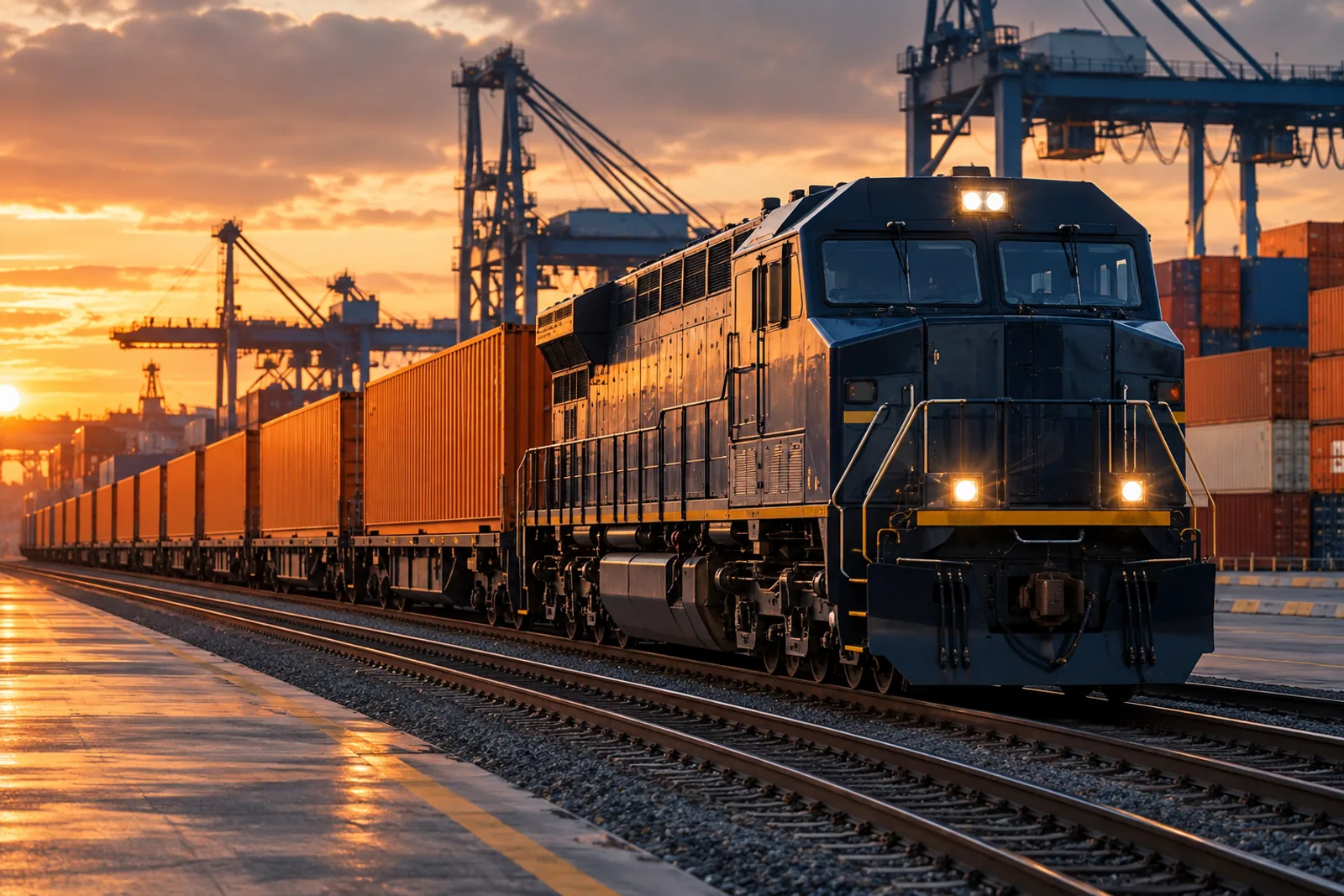
A block train runs from one origin terminal to one destination terminal without splitting wagons en route, on a set schedule. We prioritise block train services because border and transfer waiting is shorter and the schedule is more predictable than single-wagon shipments.
The route has two gauge changes. China uses standard gauge (1435 mm); Kazakhstan, Azerbaijan and Georgia use broad gauge (1520 mm); Turkey is standard gauge again. Containers are therefore transferred between wagons, or wagon bogies are exchanged, at the China–Kazakhstan border and at the Akhalkalaki transfer facility in Georgia. For containers this is a planned and relatively quick step, and we build it into the transit estimate and show it as a stage on your tracking link.
First and last mile: making container rail door-to-door
A train never reaches your factory gate. Every rail quote we prepare has three parts:
- First mile: empty container positioned at your loading address, then trucked to the departure terminal.
- Main haul: terminal-to-terminal rail, border transfers and, where relevant, the Caspian ferry.
- Last mile: trucking from the arrival terminal to the consignee's warehouse and return of the empty container.
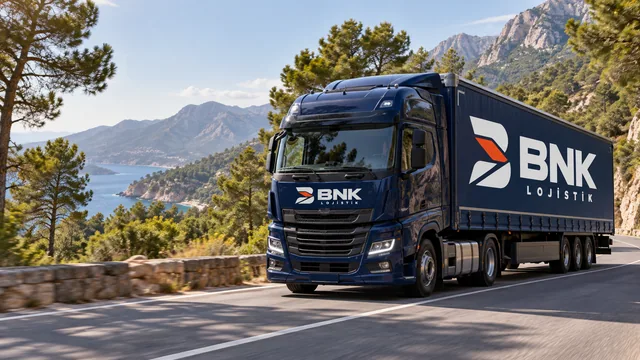
Trucking legs run with our road freight team; port-based alternatives with our sea freight planning.
Our rail process step by step
- We listen and compare: we review your cargo and delivery date and compare rail, road and sea on time and cost. If rail does not fit, we say so.
- Terminal and schedule: container type (20', 40', 40' HC) and loading day aligned with the train departure.
- Documents: consignment note and commercial documents checked before departure so that descriptions, package counts and weights match.
- Loading and tracking: seal number and loading photos are recorded; your tracking link shows departure, border, transfer and estimated delivery dates.
- Last mile and delivery: delivery to your warehouse, with all shipment documents kept together in one folder.
Rail documents checklist
Standard-gauge countries operate under the CIM rules and broad-gauge countries under SMGS. On routes that combine both, a common CIM/SMGS consignment note is usually used, which avoids re-consigning the cargo at the border between the two regimes.
- Commercial invoice and packing list
- Certificate of origin
- CIM, SMGS or combined CIM/SMGS consignment note
- Export or import customs declaration and transit declaration
- Product certificates as required: conformity, phytosanitary, veterinary or analysis
- Dangerous goods documentation where applicable
Requirements depend on the product and destination country and are confirmed against current regulations for each shipment.
Who uses rail freight
Importers of machinery parts, electronics, appliances or textiles from China, and manufacturers shipping regular container volumes to Kazakhstan and Uzbekistan. For very heavy, low-value cargo such as stone blocks, sea freight is usually better; for urgent loads of a few pallets, road usually wins. Reefer containers are possible but capacity is limited, so we confirm it in advance.
Why BNK Logistics
- We are not tied to one mode: road, sea and rail are planned together, and rail is recommended only when it genuinely helps.
- A tracking link with stages and shared documents; every shipment's documents in one folder.
- Communication in English, Turkish, Russian and Chinese, useful when a Chinese supplier and a Central Asian buyer are involved.
- Face-to-face meetings at our office in Muratpaşa, Antalya.
For country-by-country road and rail options see our Central Asia freight page.
What we need for a quote
Origin and destination addresses, cargo type, packing, number of pieces or pallets, dimensions, total weight, target shipping date and any special handling needs. Submit the request form and you receive a tracking code; you can also write to us on WhatsApp or by email.
Frequently asked questions
How long does rail freight from China to Turkey take?
Block train services via the Middle Corridor typically take about 12-18 days terminal to terminal. The Caspian ferry, gauge-change transfers and seasonal demand affect this.
Is rail more expensive than sea freight?
Rail freight per container is usually higher than ocean freight, but transit time is roughly halved. Rates change with season and demand, so we quote each shipment individually.
What is the BTK line?
The Baku–Tbilisi–Kars railway links Azerbaijan to Kars in eastern Turkey through Georgia. Middle Corridor containers to and from China and Kazakhstan use it, with a transfer from broad to standard gauge at Akhalkalaki in Georgia.
Which consignment note is used on this route?
CIM applies in standard-gauge countries and SMGS in broad-gauge countries; on combined routes a common CIM/SMGS consignment note is usually issued. Commercial invoice, packing list, certificate of origin and customs declarations are also required.
Can you ship by rail from Turkey to Central Asia?
Yes. Containers reach the Kazakh rail network via BTK and the Caspian ferry and continue to Kazakhstan, Uzbekistan and neighbouring countries, usually in about 12-20 days depending on destination. For urgent loads, road is generally faster.